Our people
Rynty Paula
Dec 16, 2025
Rewriting her career: Paula’s journey from customer support to software engineering
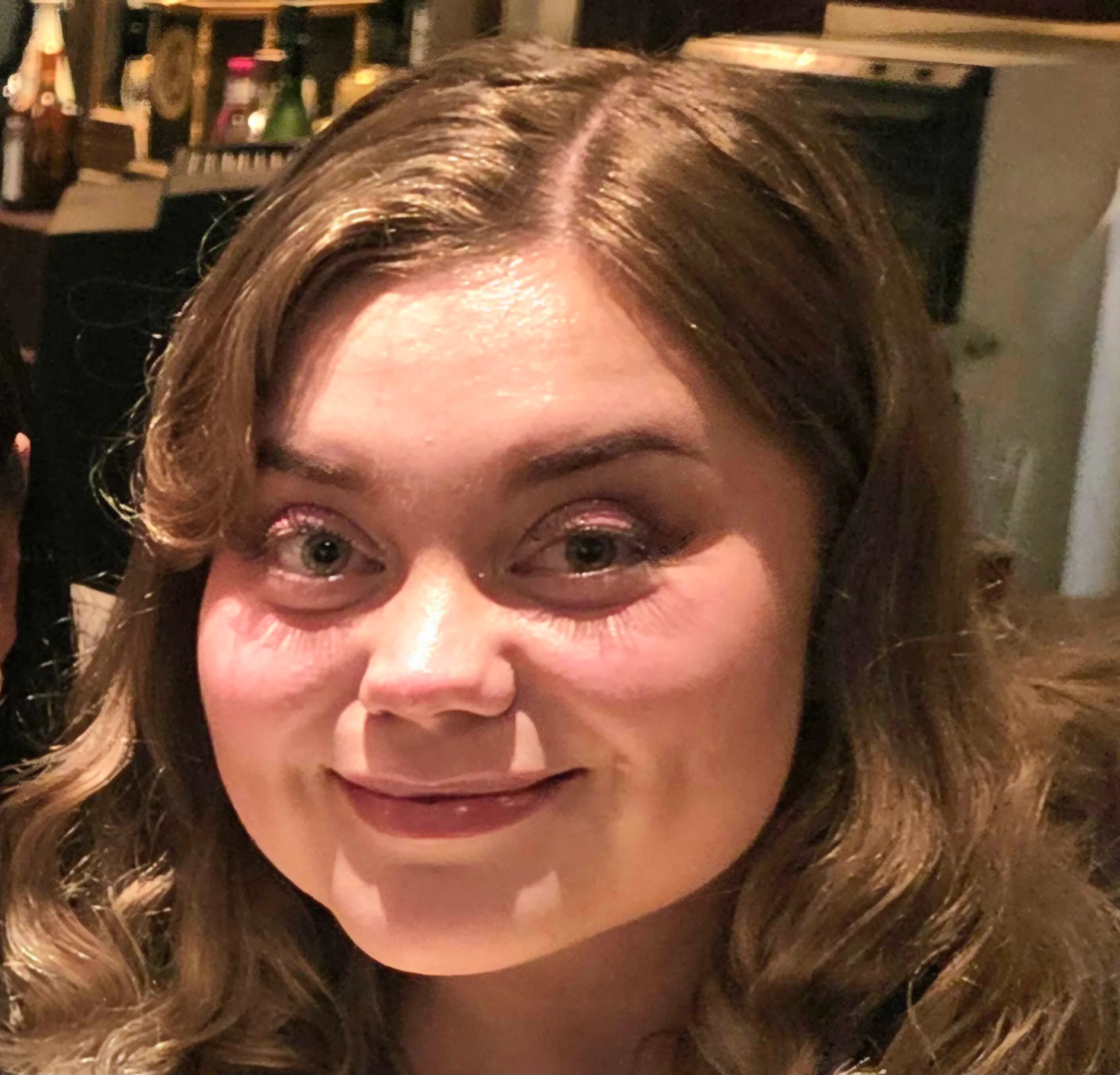
Hi there! 👋 I’m Paula, a Software Engineer at Wolt based in Helsinki. I work in our Retail Acceleration team, building features for our end users across new retail areas – from gift orders to third-party loyalty programs.
I joined Wolt as an Engineering Intern in April 2025 and became a full-time Software Engineer after completing the internship in October. In this article, I’ll share how I moved from customer support and branding into engineering, and offer advice for career shifters, along with practical tips for anyone thinking of applying to Wolt’s engineering internship.
The switch to engineering
Before pivoting into tech, I spent four years at Wolt in a variety of roles: first in Customer Support as a Coach, and briefly in our Brand Experience team as a Copywriter. My background also includes experience in HR and a degree in graphic design. At the time, these various roles felt like separate chapters, but looking back, they've all played a key role in shaping my engineering journey.
In April of 2024, I decided to finally act on a long-time dream: to build and develop the products I’d spent years supporting. I enrolled at Hive Helsinki, an intensive coding school focused on learning-by-doing, creative problem-solving, and peer collaboration.
Starting programming with zero experience was daunting, but Hive’s unique pedagogy, combined with its tight-knit community, made the challenges feel possible. Students at Hive come from all sorts of backgrounds — teachers, musicians, healthcare workers, restaurant staff, and those experiences become surprisingly useful in engineering.
Have I felt imposter syndrome? Oh, have I ever! Over time, I’ve come to realize that it doesn’t really fully disappear. Instead, you learn to live with it and even transform it to your advantage. Whenever a tinge of doubt creeps in, I remind myself of where I started and how far I’ve come and grown since then. At the end of the day, being an engineer is not about knowing everything already, but about constantly expanding the boundaries of your knowledge.
Combining design and code
At Hive, we code almost exclusively with C and C++, which might sound like a strange starting point for a frontend engineer. In actuality, starting with low-level programming gave me a strong foundation in problem solving and computational thinking.
During my studies, I started exploring web development on my own out of desire to see how I could utilize my design experience and visually see my code changes in the browser. I experimented first with HTML, CSS, and basic React and TypeScript, and eventually moved to building functional web applications.
When I started at Wolt, I quickly found my happy place at what's lovingly referred to as the front of the frontend. It's where I get to wire logic behind visuals, convert Figma prototypes into responsive web components, utilize assets from our carefully crafted design systems, and transform ideas into digital reality. I still get immense joy seeing a feature I’ve built come to life, and realizing that my lines of code have become something that contributes to the simplicity and delight our products aim to deliver to our users.
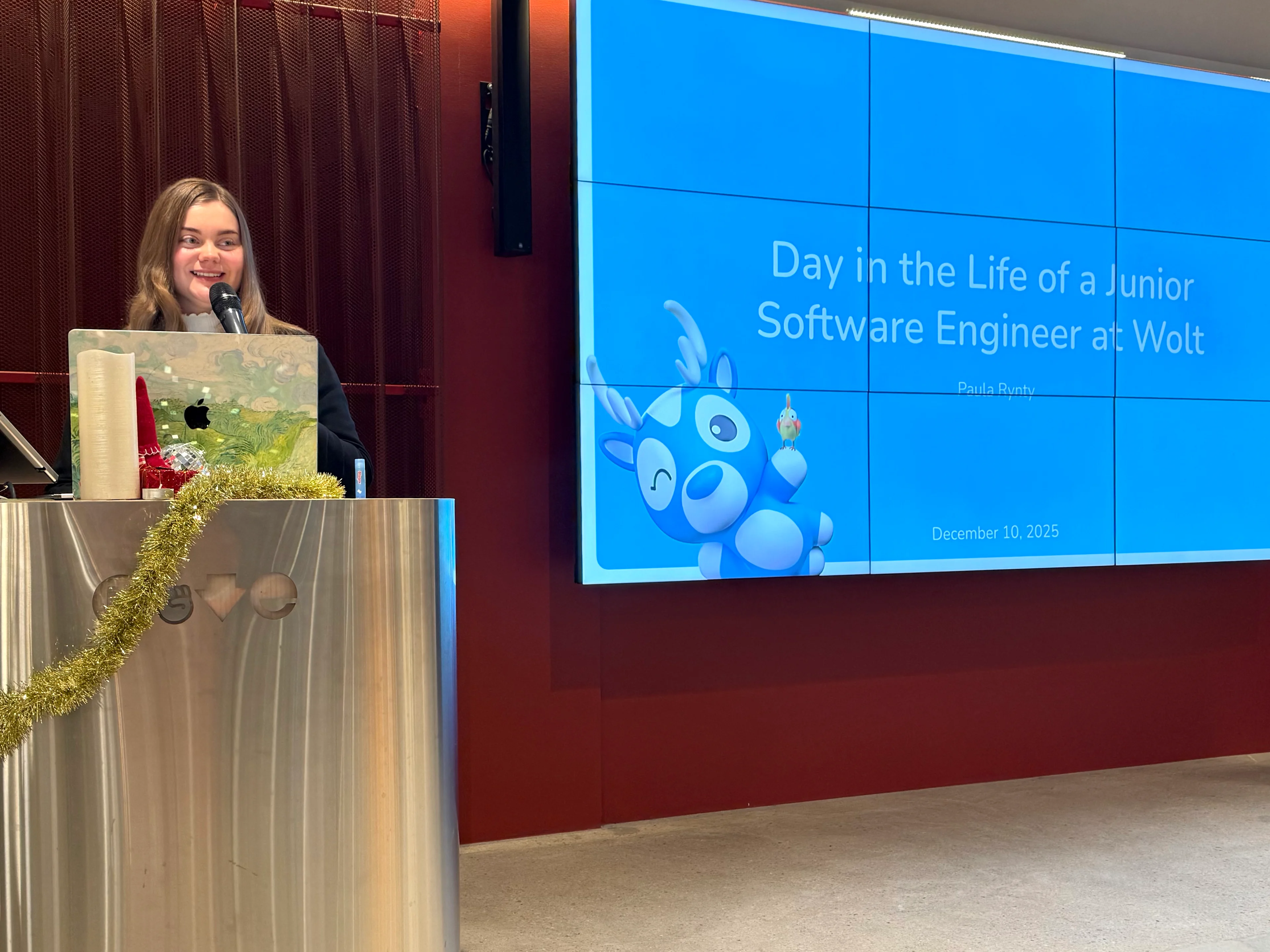
How my previous experiences influence me as a developer
It took me a while to see it, but every prior role I’ve had plays a part in how I work as an engineer today.
Working in support taught me how to approach a feature, a screen or even a singular component from the user’s standpoint, and how to better anticipate bugs, errors and pain points.
Coaching taught me how to give and receive feedback with curiosity and consideration.
Brand and copywriting taught me attention to detail and the importance of clear brand-aligned communication across all user touchpoints.
Hive studies taught me to write more maintainable and scalable code. To be resilient and experimental with solving problems and bugs, and understand how to make better technical decisions from a feature development standpoint.
When I work on a feature today, I think about how a user might perceive and interact with it – how its building blocks are announced by a screen reader, whether the layout adjusts to different viewports and text reading directions, and what information is communicated to the user in case of an error.
This multifaceted way of thinking is something you gain through varied experiences. And it’s one of the most essential skills an engineer can have.
Keen to branch out into engineering?
If you're thinking about making a leap into the world of code and software development, here are a few pieces of advice that helped me along the way.
Don’t get attached to a single identity Every accumulated skill and experience contributes to your unique professional toolbox. The ability to apply expertise from different disciplines makes you adaptable and resourceful, whether that’s communication, problem-solving, design thinking, or technical know-how.
Reframe "starting from scratch" You're not starting over, you're building on top of what you already know. Whether it's communication, problem-solving, empathy, or design, those are all skills a well-rounded engineer possesses, even if they don't show up in a job title. Progress isn’t linear, and career paths don’t have to be either.
Whatever you do, remain curious Curiosity is your compass. Follow it, even if it doesn't lead to an immediate result. I learned frontend development on the weekends out of pure fascination, which eventually led me to building delightful features and user interfaces every day at work. Cliché as it may be, staying curious can open doors to opportunities you never even knew existed or were possible to explore.

Thinking about applying to Wolt’s Engineering Internship?
When I prepared my internship application, I focused on two main things: why I wanted to work as an engineer specifically at Wolt and what makes me stand out.
Think about what makes you you, and how you can apply your skills and competencies into the internship position.
With the technical assessment, try to maximize your learnings, take time to polish your implementation, and try to have fun along the process. Focus on who might use and benefit from what you build, whether that’s a fellow engineer or a customer.
In interviews, honesty and curiosity go a long way. Not knowing something is not the end of the world, but it makes a big difference how you demonstrate willingness to learn what was unclear to you. Even though technical interviews may feel daunting, they are also a great opportunity to reflect on your learnings and ask questions from the interviewers.
Final takeaways
Starting at Wolt as an Engineering Intern has been one of the most impactful and fulfilling journeys of my life so far. As a newcomer in the field, I've learned that my multifaceted background is, if anything, a superpower. And if you're thinking about changing careers like I did, it will likely be yours too.
Let's keep learning and build something great together 🩵
Thinking about starting your own engineering journey? Our internship opportunities open early next year! Until then, learn more about our internship programs and start preparing your journey.