Big hearts, smart minds, low egos.

Learn more. Build more. Ship more.
At Wolt, you’ll learn more, build more, and ship more than in most other companies. You’ll be challenged a lot, but also have a lot of fun on the way. All of which comes from working with passionate, caring, down-to-earth and super-smart people.

Our Global Operating Principles are a shared guide for how we work, make decisions, and solve problems across DoorDash, Deliveroo, and Wolt.

Global Operating Principles
Customer obsessed, not competitor focused
Think from first principles and work backwards from the ideal customer experience. Be aware of competitive moves but don’t blindly copy them or start the discussion with what someone else is doing. Equally, don’t seek only incremental improvement by optimizing our prior successes; sometimes we will have to start over and build something new to satisfy customers. Always do better for the customer proactively, even without external pressure.
Operate at the lowest level of detail
Break down a problem into its lowest level input drivers. Don’t just look at outcome metrics because they represent averages over all of our customer experiences. Instead, understand how to move the inputs to a metric and understand for which cohort of customers that matters. Some inputs (e.g., gate codes to apartment complexes) only apply to certain customer cohorts. Then apply this approach to each cohort of customers. Over time, that’s how you move the overall metric in a big way.
Bias toward action
We aim to make speed of execution a durable competitive advantage. Act by default and always ask how we can solve a problem for customers faster. For example, some problems don't require analysis (e.g., if there's milk spilled in aisle seven, you don't A/B test whether to clean it up, you clean it up). When the right move isn't obvious, form a clear hypothesis, know the input you're trying to move, then take action. Ship a prototype, run an experiment, and talk directly to customers. Being wrong quickly is often better than being right slowly. Get after it today!

Truth seek
It’s natural to want to believe in our biases and previous successes. Instead, when approaching a problem, seek disconfirming evidence for your hypothesis. Collect data and talk directly to customers, especially to understand the best and worst responses to what we’ve shipped. When the anecdotes and data disagree, it means our measurements aren’t collecting the full picture. Trust the anecdotes and improve any gaps in our measurements.

And, not either/or
When problem solving, solve for the “and” and reject false dichotomies. Set positive (e.g., goals) and negative metrics (e.g., constraints) on every problem to understand the set of tradeoffs that are acceptable. Don’t confuse this principle to mean “never prioritize” when it comes to resource or project allocation; instead, use it to understand, accept, and communicate tradeoffs when solving problems.

1% better every day
Success breeds complacency; never fall for it. Similarly, don’t let the quest for perfection stop you from making improvements today. Instead, recognize that small improvements compound over time, especially on a large base. Intense sprints can be heroic and sometimes necessary in times of crisis, but consistency over time usually wins. Always keep improving and striving for higher and higher standards.
Choose optimism and have a plan
Sometimes, circumstances happen and are out of your control. But how you feel about them is entirely within your control. CHOOSE to be positive, but avoid delusional thinking by building a plan. The prepared mind has a better chance of winning. Move forward, and take action. Don’t worry about who to blame.
One team, one fight
The company > your team > yourself. Your goal is to ultimately help customers (consumers, merchants, and Dashers) win. Sometimes, that might mean you and your team may need to take a backseat in priority if something else is better for the customer and company. Don’t point fingers when things go wrong; instead, jump in and help regardless of what is in your job description or who gets the credit.

Earn and maintain trust
Working in a high trust environment is key to building a great company. But trust has to be earned, over and again. To start, the best way to earn trust is to act consistently over time by always beating deadlines, outperforming goals, admitting your mistakes, assuming positive intent of others, and giving feedback directly (vs talking behind someone’s back). During moments of disagreement, earn trust by arguing the other person’s side before your own, escalate if there is conflict you cannot resolve, and bring all sides to the decision maker for a clean escalation. Always prioritize for the customer and company before any individual or team goal.
Debate and commit
We want to build a work environment where the best idea wins. Experts should be based on the quality of their ideas, not the seniority of their titles. In fact, try to have the most junior person or the person closest to a problem at a meeting speak first. To further support this environment, debate is critical, especially on consequential decisions. But once a decision maker and deadline are appointed, support the decision maker’s call. Make sure there are no naysayers and second guessers after a decision has been made. Champion the decision as if it were yours.

Beginner’s mindset
Approach every new technology and big shift in the business environment with positive energy to learn. The world is always changing. The greater risk is not changing with it.
Be differentiated
The only real way to serve customers better and gain an edge in business is to build something differentiating. So from Day 1, think about how we can build something 10x better than the status quo. Getting to 10x better can take different paths. Sometimes, differentiation sometimes comes in heroic forms (e.g., 5x more selection, 3x cheaper, 8x more accurate, 2x faster), but these “see it from space” advantages take a while to build. This is why continuous improvement also helps. While each “1% better” move isn’t earth shattering in impact on its own, thousands of them added together, compound and make a big difference to customers. Thus, both giant needle moving initiatives and 1% better improvements are worth celebration, and the road to ultimately building something 10x better likely requires both sets of projects.

Build global, win local
Build products that can ship globally. At the same time, recognize that we operate a very local business. When global products aren’t meeting local goals, change the roadmap to support the local team. Winning for customers locally is more important than having perfectly standardized products or org charts.

Play the long game
We like to run fast with high standards. But building truly differentiated products and relationships happens over time. Business is an infinite game. No company is a permanent winner or loser. The bar to serve customers just grows higher with each success. So, while we pride ourselves on speed and quality of execution, we have to improve our ability to plan and think longer term. It’s important to think about achieving our weekly and monthly goals, and it’s important to think about how to truly build 10x improvements for our customers over long time horizons (e.g., 12+, 24+, 36+ months).

What it’s like working at Wolt
We asked our people what it’s like to work at Wolt. Here’s what they said.
What it’s like to work at Wolt
We do common things, uncommonly well
One of the things we all share is the pride and passion we put into our work. We set our own Wolt-grade standard for excellence at pace. We move fast, with attention to detail and clear, well thought-through end goals. We aim to deliver delightful, almost perfect, solutions for customer problems.
We do common things uncommonly well and aim to be 1% better every day.

We treat each other kindly and justly
Our people are inspiring and thought-provoking but also humble, welcoming and supportive. We take our work seriously, but not ourselves. We always have a twinkle in the eye. And we celebrate one another.
We communicate through emojis, stickers and donuts.

It’s rarely easy, but always exciting
Working at Wolt isn’t always easy, but it’s definitely exciting. The pace is fast, the industry is constantly changing, and the opportunities to grab are endless.
So, if you’re a self-starter with drive and an entrepreneurial spirit, this could be the ride of a lifetime.

We’re only just getting started
We’ve built a global business, and are on a journey of building the delivery of (almost) everything. But we’re a long way from delivering everything a city can offer directly to our customers.
There are many problems still to solve. And we’re small enough that there is plenty of room to build. Every new country, business line or product we launch brings its own unique challenges.
That’s what keeps things interesting.


Hear it from the team
“Wolt is a great environment for screwing up, learning from that, growing, and moving on to do things better. We never blame anyone for mistakes, we just make sure we can learn from them.”
— Kimbo, Software Engineer and Android Competence Lead

“At Wolt, we’ve always had a high bar for building a world-class experience for our customers and we have it in our DNA to be obsessed about polishing our designs, making them close to perfection.”
- Masha, Motion Designer
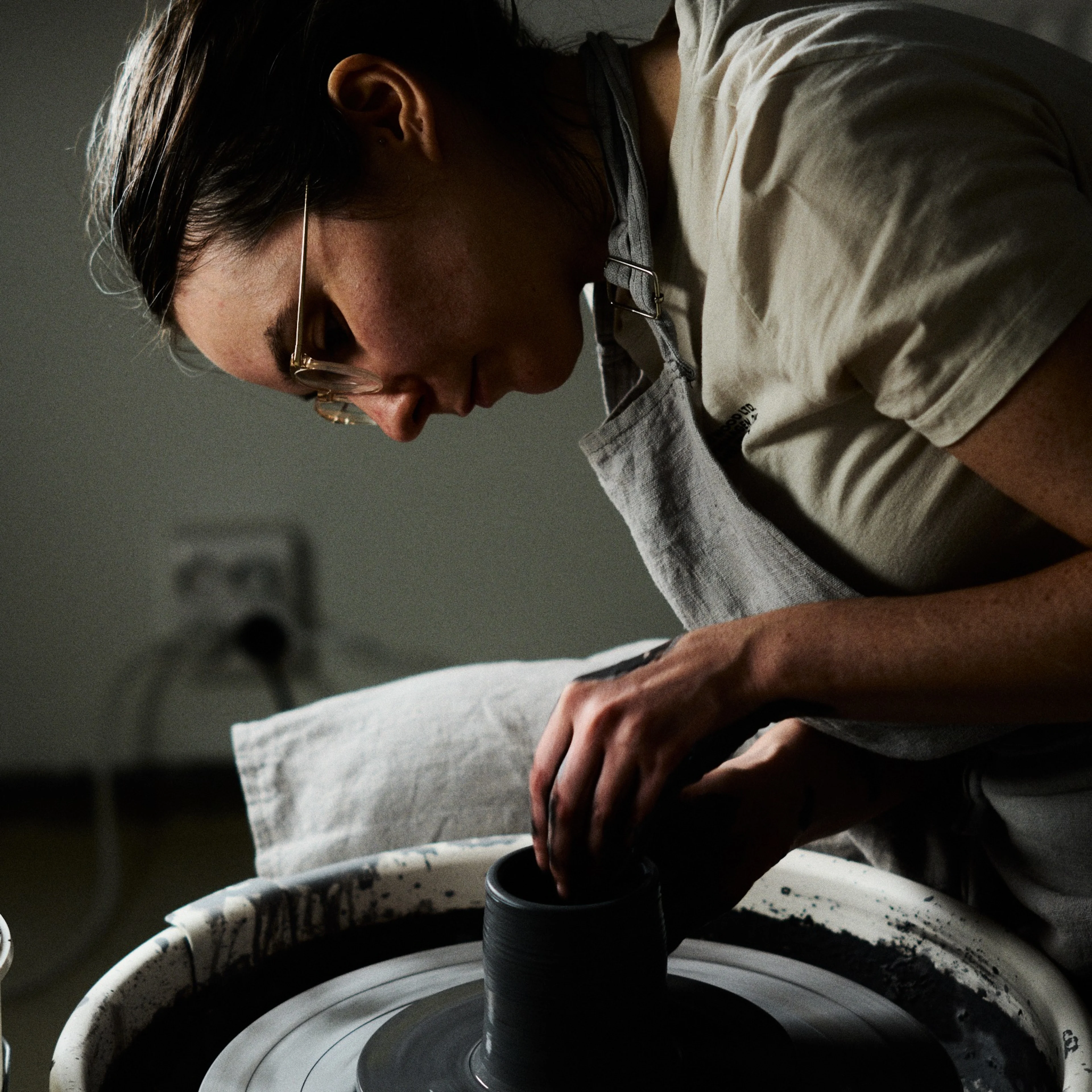
“One of the reasons I enjoy working at Wolt is the intelligent, yet humble people I get to work with.”
- Niina, Product Lead

“We give teams a lot of ownership and autonomy at Wolt, which I appreciate. We trust you to make the right call and help each other figure out where to go next.”
- Sissi, Product Director

We’re committed to diversity, equity and inclusion
We want to have all sorts of people in our team – people like you and me, and people different from you and me. Whether it’s gender, age, ethnicity, sexual orientation or religion, we try our very best to offer equal opportunities for everyone.
Diverse teams add a richness of ideas and viewpoints that benefit us all. And we’d like to keep it that way.
